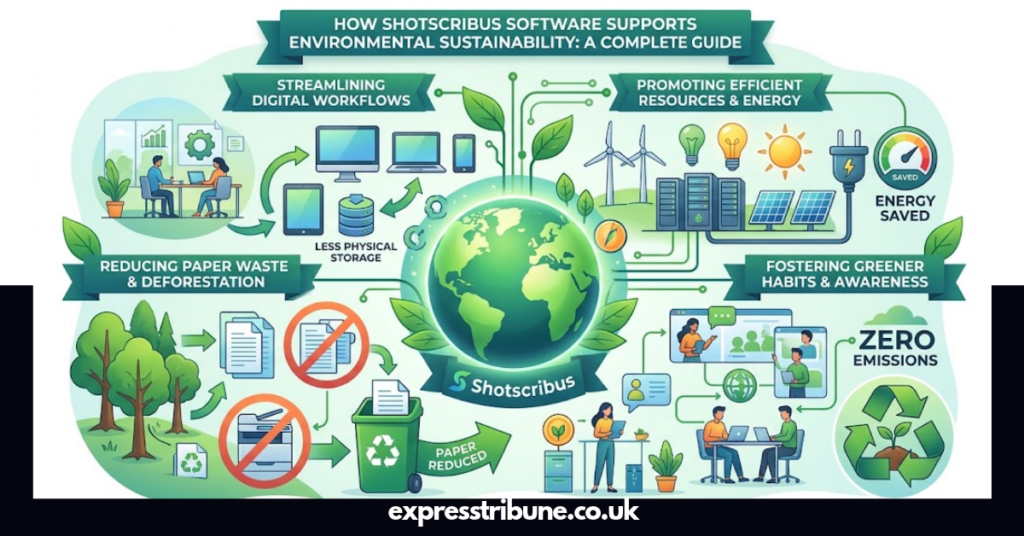

Paper waste, unnecessary printing, and inefficient office processes can increase the environmental impact of everyday work. Digital tools may help organizations reduce these problems, but choosing software without understanding its actual features can lead to unrealistic expectations. So, how can shotscribus software help the environment? The answer depends on what the software does, how people use it, and whether it replaces resource-intensive activities rather than simply adding another digital process.
What Is Shotscribus Software?
Shotscribus is the name associated with this topic, but its precise functionality and official product details need independent verification. Without reliable documentation, it would be misleading to describe it as a confirmed environmental management platform, document editor, or sustainability application.
To understand its potential environmental value, first identify whether it supports digital documents, collaborative work, resource tracking, or another function. These features can have different effects on paper consumption, energy use, and waste.
How Can Shotscribus Software Help the Environment?
The potential environmental benefits of software depend on the tasks it performs. If Shotscribus supports digital document creation, electronic sharing, or paperless workflows, it could help users reduce printing and make better use of existing resources.
For example, a team that shares documents electronically instead of printing several copies may save paper and printing supplies. However, this benefit should be measured against actual printing reductions rather than assumed from the use of software alone.
Potential benefits include:
- Less paper waste: Digital documents can replace unnecessary printed copies.
- Fewer printing supplies: Reduced printing may lower the use of ink and toner.
- More efficient collaboration: Electronic sharing can reduce duplicate documents.
- Better resource awareness: Tracking features, if available, may help users identify waste.
- Improved record management: Searchable digital records can reduce the need for physical storage.
These are potential benefits of suitable digital workflows, not verified results from Shotscribus.
Can Shotscribus Reduce Paper Consumption?
Paper reduction is one of the clearest ways digital workflows can support environmental sustainability. When software allows users to create, review, store, and share documents electronically, it can reduce the need for printed pages.
The U.S. Environmental Protection Agency (EPA) identifies source reduction and reuse as preferred waste-management approaches. However, the environmental benefit depends on whether digital processes genuinely replace paper use.
US EPA+1
Practical ways to reduce paper include:
- Reviewing documents on a screen before printing.
- Sharing digital copies instead of distributing printed versions.
- Keeping electronic records when physical copies are not legally required.
- Printing only essential pages.
- Using double-sided printing when paper copies are necessary.
Example: A small business that prints five copies of every report could switch to one printed reference copy and share the remaining copies electronically, provided its software supports this workflow.
How Can Digital Workflows Reduce Waste?
Waste prevention begins with avoiding unnecessary materials. If Shotscribus includes useful digital document or collaboration features, users may be able to reduce duplicate files, printed drafts, and disposable office supplies.
The most effective approach is to identify where waste occurs before introducing new software. An organization should then compare its material use before and after the change.
For example, a school could track how many worksheets it prints each month and test whether electronic assignments reduce that number without making learning harder for students.
Can Shotscribus Help Conserve Natural Resources?
Paper production requires raw materials, water, energy, and transportation. Reducing unnecessary paper consumption can help lower demand for these resources, although the actual environmental benefit varies by paper type, production method, and disposal route.
If Shotscribus enables genuinely paperless work, it may support resource conservation indirectly. The software itself should not be credited with specific resource savings unless measurements or reliable product evidence support that claim.
Organizations can strengthen these efforts by reusing materials, buying recycled paper when appropriate, and following responsible recycling practices. The EPA explains these approaches in its guidance on Sustainable Materials Management.
How Can Software Improve Office Efficiency?
Digital tools can help teams organize work and reduce unnecessary administrative tasks. Depending on its actual capabilities, Shotscribus might support more efficient processes if it provides features such as document organization, electronic sharing, or collaborative editing.
A more efficient workflow can also prevent waste. Employees may spend less time producing duplicate documents, printing revised drafts, or searching through physical files.
Before adopting the software, check whether it offers:
- Searchable document storage.
- Version control for revised files.
- Secure sharing and access permissions.
- Collaboration tools that reduce duplicate work.
- Export options that support accessible, reusable documents.
These are features to investigate, not confirmed Shotscribus capabilities.
Can Shotscribus Reduce Carbon Emissions?
Potentially, but the answer depends on the activities it replaces. Digital workflows may avoid some emissions associated with paper production, printing, physical delivery, and transportation.
Digital services also consume electricity through computers, networks, and data centres. Their overall environmental impact depends on energy sources, equipment efficiency, usage patterns, and the amount of physical activity they replace.
For this reason, the best way to assess the environmental impact of Shotscribus is to compare the full workflow before and after adoption. Counting fewer printed pages is a useful starting point, but it does not establish a complete carbon reduction.
Does Digital Software Always Benefit the Environment?
No. Digital tools can reduce some forms of waste while creating other environmental costs.
For example, a company might stop printing reports but purchase additional computers, use energy-intensive online services, or replace working devices unnecessarily. In that case, the total environmental benefit may be smaller than expected.
To make a balanced decision, consider both the benefits and the costs.
| Environmental factor | Potential benefit | Possible drawback |
| Paper use | Fewer printed documents | Users may still print every file |
| Printing supplies | Less ink and toner consumption | Printers may remain in constant use |
| Electricity | Efficient digital workflows may save energy overall | Computers and online services consume power |
| Transportation | Fewer physical documents may need delivery | Digital work does not eliminate all travel |
| Storage | Less need for physical filing space | Digital storage requires hardware and electricity |
| Equipment | Existing devices can support new workflows | Unnecessary upgrades can increase electronic waste |
| Carbon emissions | Some paper and transport emissions may be avoided | Digital emissions depend on the complete system |
The best outcome comes from reducing unnecessary consumption across the entire process rather than simply replacing one type of resource with another.
How Can Shotscribus Support Sustainable Business Practices?
Businesses can use digital tools as part of a wider environmental plan. If Shotscribus offers relevant document-management or reporting features, those capabilities could support efforts to monitor waste and improve daily operations.
A practical sustainability plan should include clear goals, assigned responsibilities, and regular reviews.
For example, a business could:
- Measure its monthly paper and printing consumption.
- Identify tasks that do not require printed documents.
- Test a suitable digital workflow.
- Train employees to use it effectively.
- Compare paper consumption and electricity use before and after adoption.
- Adjust the process based on the results.
This approach turns a general environmental goal into something measurable. It also helps managers avoid making unsupported claims about how much pollution or carbon their software has prevented.
Can Students and Teachers Use Digital Tools to Protect the Environment?
Schools and colleges often produce worksheets, assignments, handouts, notices, and administrative documents. Moving suitable tasks to digital formats can reduce paper consumption while helping teachers and students organize their work.
If Shotscribus supports the required educational tasks, it could potentially become part of a paper-saving workflow. Schools should first confirm its features, accessibility, privacy protections, and compatibility with their existing systems.
Useful practices include:
- Sharing assignments electronically when every student can access them.
- Reviewing work digitally when appropriate.
- Keeping reusable lesson materials in digital folders.
- Printing only the material students genuinely need.
- Providing printed or accessible alternatives for students who need them.
Digital learning should support education rather than create barriers for students with limited devices, internet access, or suitable study environments.
How Can Individuals Use Software More Sustainably?
Individuals do not need a complicated environmental programme to make a difference. Small changes in how people create, store, and share information can help prevent unnecessary resource use.
If Shotscribus provides relevant digital functions, users can combine them with everyday sustainable habits.
- Avoid printing documents that can be read comfortably on a screen.
- Delete unnecessary duplicate files when they are no longer needed.
- Use existing computers and phones for as long as they remain suitable.
- Enable power-saving settings on devices.
- Keep software updated when updates provide necessary security or efficiency improvements.
- Recycle unwanted electronic equipment through suitable local facilities.
The U.S. Department of Energy recommends enabling computer power-management features and switching off equipment when it is not needed.
What Environmental Features Should You Look for in Shotscribus?
Before deciding that Shotscribus is an environmentally friendly tool, examine its official documentation and test the functions that matter to your work.
A product’s environmental value depends on what it actually enables users to do, rather than its name or marketing language.
| Feature to investigate | Why it matters | Evidence to look for |
| Digital document creation | May replace printed drafts | Official feature list and practical test |
| Electronic sharing | May reduce printed copies | Sharing and export documentation |
| Collaboration | May reduce duplicate work | Version history and editing features |
| Resource tracking | May help identify waste | Reports, dashboards, or measurement tools |
| Offline access | May reduce dependence on continuous connectivity for some tasks | Documented offline functionality |
| Accessibility | Helps more people use digital workflows | Accessibility documentation and testing |
| Security | Protects sensitive digital records | Privacy policy and security documentation |
| Energy efficiency | May reduce computing demand | Independent measurements or technical specifications |
| Data export | Helps avoid unnecessary dependence on one platform | Supported formats and export instructions |
A missing feature does not automatically make a product environmentally harmful. It simply means users should not assume that the software provides that particular benefit.
How Can You Measure the Environmental Impact of Shotscribus?
Measurement is essential if a company wants to report credible sustainability results. Rather than relying on broad claims, record the resources consumed before adopting the software and compare them with the results afterward.
The following table provides a simple framework.
| Measurement | Before adoption | After adoption | What it shows |
| Pages printed monthly | Record actual total | Record actual total | Change in paper use |
| Paper purchased monthly | Record quantity | Record quantity | Change in paper demand |
| Ink and toner purchases | Record spending or quantity | Record spending or quantity | Change in printing supplies |
| Electricity consumption | Record relevant usage | Record relevant usage | Change in energy demand |
| Physical document deliveries | Count deliveries | Count deliveries | Change in document transportation |
| Electronic equipment purchases | Record purchases | Record purchases | Whether new hardware was needed |
| Digital storage use | Record available baseline | Record later usage | Growth in storage demand |
Use comparable reporting periods and account for changes in staff numbers or workload. Otherwise, a reduction in total printing may simply reflect fewer employees or less work.
For a more complete environmental assessment, include the energy and equipment required to run the digital workflow. Report measured results separately from estimates.
What Are the Limitations of Using Shotscribus for Environmental Sustainability?
Digital software is only one part of an environmental strategy. It cannot, by itself, guarantee lower emissions, prevent all waste, or ensure that an organization operates sustainably.
Several limitations deserve attention:
- Unverified functionality: Shotscribus’s exact capabilities need confirmation from reliable product documentation.
- User behaviour: People may continue printing even when digital options are available.
- Electricity consumption: Devices and online infrastructure require energy.
- Electronic waste: Short equipment replacement cycles can create additional waste.
- Accessibility needs: Some users may need physical documents or alternative formats.
- Data security: Poorly managed digital records can create privacy and security risks.
- Limited measurement: Without reliable baseline data, environmental savings cannot be established.
Responsible adoption means considering these issues alongside the potential benefits. A digital process is most useful when it reduces unnecessary consumption without creating larger problems elsewhere.

How Does Shotscribus Compare With Other Environmental Solutions?
Different tools address different environmental problems. A document application may help reduce printing, while dedicated waste-management software may track waste streams and energy-management systems may monitor electricity consumption.
Shotscribus should be compared with alternatives only after its primary purpose is established.
| Solution | Main purpose | Potential environmental contribution |
| Digital document software | Create and manage documents | May reduce printing |
| Collaboration platforms | Share information and coordinate work | May reduce duplicate documents and some travel |
| Environmental management software | Track environmental goals and compliance | May improve monitoring and reporting |
| Energy-management systems | Measure and manage energy use | May identify opportunities to save electricity |
| Waste-tracking software | Record waste generation and disposal | May help identify waste-reduction opportunities |
| Paper-reduction policies | Change printing and document practices | Directly targets unnecessary paper consumption |
The right choice depends on the problem an organization wants to solve. Software should meet a clearly defined need and produce measurable improvements rather than be adopted simply because it is described as green.
Best Practices for Using Digital Software Responsibly
If you decide to use Shotscribus for an appropriate digital workflow, combine the software with practices that reduce resource consumption.
- Set a clear goal: Decide whether you want to reduce paper, printing costs, physical storage, or another measurable impact.
- Check the product first: Verify the official features, operating requirements, and privacy terms.
- Use existing devices: Avoid purchasing new hardware unless there is a genuine need.
- Reduce unnecessary printing: Make electronic review the default when practical.
- Save electricity: Use power-saving settings and switch off equipment when appropriate.
- Protect digital records: Use suitable access controls, backups, and retention policies.
- Track results: Compare resource use before and after the change.
- Recycle responsibly: Send obsolete electronic equipment to appropriate collection or recycling services.
The EPA’s waste-management hierarchy offers additional guidance on reducing waste before relying on recycling.
Frequently Asked Questions
If it supports paperless documents or efficient digital collaboration, Shotscribus could help reduce unnecessary printing and material use. Its actual environmental contribution depends on verified features and measured results.
Its environmental credentials have not been independently established here. Check the official documentation, resource requirements, privacy policy, and any credible environmental assessments before describing it as eco-friendly.
It may help if its features allow users to replace printed documents with digital alternatives. Track printing volumes before and after adoption to establish whether paper consumption actually decreases.
No verified emissions reduction can be attributed to Shotscribus without product-specific evidence. Digital workflows may avoid some paper-related emissions, but electricity use, hardware, and data storage must also be considered.
That depends on its actual purpose and capabilities. If it supports their document or collaboration needs, students and businesses could evaluate it as part of a wider paper-reduction plan.
No. Digital tools consume electricity and depend on electronic equipment. They are more likely to help when they replace unnecessary material use, work efficiently, and do not require avoidable hardware purchases.
Conclusion
Digital technology can support environmental sustainability when it helps people use fewer materials, prevent waste, and manage resources more efficiently. The potential answer to how can shotscribus software help the environment therefore depends on its verified functions and how effectively users apply them.
Before publishing or relying on specific environmental claims, confirm what Shotscribus actually does and look for measurable evidence. Start with one practical goal, such as reducing printed pages, track the results, and consider electricity use and electronic waste alongside any savings.
What matters most is the result: a digital workflow should make everyday tasks more efficient while reducing unnecessary environmental costs.
If you have used Shotscribus, share its verified features or your experience so readers can better understand its practical value.