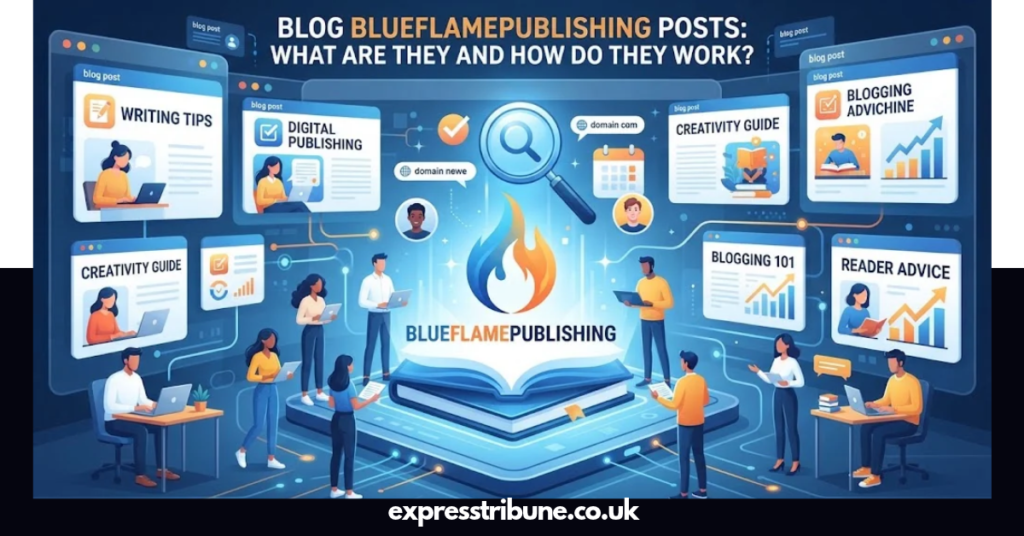

Blog blueflamepublishing posts are online articles connected with the BlueFlamePublishing name and its publishing-focused websites. Current pages associated with the term cover blogging, writing, digital publishing, creativity, and advice for readers and writers.
The phrase can also appear as a search query rather than the official name of one single publication. Several websites currently use similar wording, so readers should check the domain, author, publication date, and About page before treating a particular article as an official BlueFlamePublishing resource.
This guide explains how to understand the term, find useful articles, judge their quality, and get practical value from publishing-related content.
What Does BlueFlamePublishing Focus On?
BlueFlamePublishing.org describes itself as a platform for people interested in writing, reading, creativity, and ideas. Its current homepage contains articles covering different subjects, including blogging and digital publishing.
The site also maintains a category specifically titled “blog blueflamepublishing posts.” The category currently contains articles using the keyword in titles and discussing blogging, writing, and digital content.
Because several similarly named domains exist, the safest approach is to identify the exact website before assuming that every result belongs to the same publisher.
Why Are People Searching for Blog Blueflamepublishing Posts?
People may search the phrase for several reasons:
- They want to find articles published under the BlueFlamePublishing name.
- They want blogging or writing ideas.
- They are researching digital publishing.
- They want to understand a particular BlueFlamePublishing article.
- They are looking for information about writing and online content.
- They want to discover new topics or publishing resources.
Search intent matters because the phrase does not always describe one specific article. It can refer to a category, a group of posts, or articles discussing the platform.
What Topics Can You Find in These Posts?
The available BlueFlamePublishing pages show a broad editorial mix. Current examples include blogging, digital writing, creativity, publishing, and online growth.
| Topic | What a Reader May Learn |
| Blogging | How blogs work and how writers can organize content |
| Digital Publishing | How online publishing differs from traditional publishing |
| Writing | Ways to communicate ideas clearly |
| Creativity | Methods for developing original ideas |
| Content Creation | How to plan useful articles |
| Online Growth | Basic concepts related to building an online audience |
| Self-Publishing | General information about independent publishing |
| Reader Engagement | Ways content can become easier and more interesting to read |
The exact topics change over time, so readers should check the latest category and individual article pages rather than assuming every post covers the same subject.
How Can You Find the Right BlueFlamePublishing Article?
Finding the correct article becomes easier when you use specific search terms.
Try searches such as:
- site:blueflamepublishing.org blog blueflamepublishing posts
- site:blueflamepublishing.org BlueFlamePublishing blog
- site:blueflamepublishing.org publishing writing
- The exact title of the article you remember.
- The article title plus the author’s name.
The first step is to verify the domain. Search results currently show multiple websites with names that resemble BlueFlamePublishing, so domain verification is important.
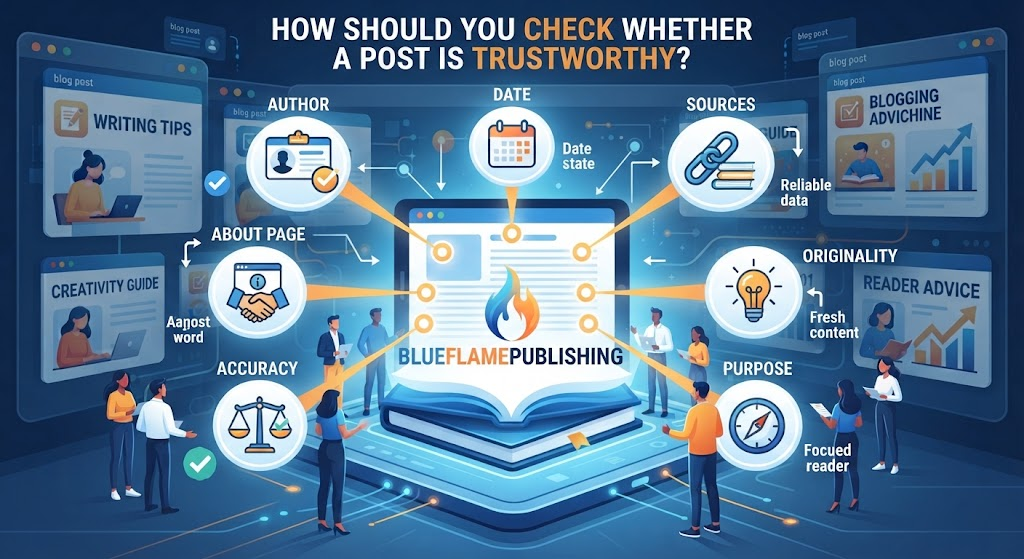
How Should You Check Whether a Post Is Trustworthy?
Not every article that uses a particular keyword should automatically be treated as an authoritative source.
Before relying on a post, check:
- Author: Is a real author or editorial team identified?
- Date: Is the publication date clear?
- Sources: Does the article link to reliable primary information?
- About page: Does the website explain who operates it?
- Originality: Does the article provide useful information rather than repeating other pages?
- Accuracy: Can important claims be independently verified?
- Purpose: Is the article informing readers, selling something, or targeting search traffic?
Google’s people-first guidance recommends clear authorship, useful original information, reliable sourcing, and content created primarily to help readers.
Are All Blog Blueflamepublishing Posts Official?
No, you should not assume that every page containing the phrase is official.
A search for the keyword currently returns pages from different domains, including BlueFlamePublishing.org and other websites using similar terminology.
This distinction matters because a page discussing BlueFlamePublishing is not necessarily published by BlueFlamePublishing itself.
A simple verification method is to compare the domain with the publisher’s official website, then check the site’s About, contact, author, and category pages.
What Makes a Useful Blog Post?
A useful article answers the reader’s question without forcing them to search for basic information somewhere else.
Strong blog blueflamepublishing posts should aim to provide:
- A clear answer near the beginning.
- Helpful explanations.
- Relevant examples.
- Simple headings.
- Accurate facts.
- Useful links or sources.
- A logical structure.
- Original information or analysis.
- A clear author or publisher identity.
Google’s current guidance emphasizes substantial, original, people-first content rather than pages created mainly to attract search traffic.
How Can Writers Create Better Publishing Posts?
Writers can improve publishing content by starting with a real reader problem.
For example, instead of writing a general article about blogging, a writer could answer a specific question such as:
“How can a beginner structure their first blog post?”
A helpful answer could then explain research, headline creation, introduction writing, headings, examples, editing, internal links, and final proofreading.
This approach gives the reader something practical to use instead of simply repeating broad statements about blogging.
How Do Blog Posts Help Readers and Writers?
For readers, a well-organized article can turn a complicated subject into smaller and easier steps.
For writers, publishing creates a way to demonstrate knowledge, explain ideas, build an archive of work, and connect with a specific audience.
However, publishing more pages does not automatically create better search performance. Google states that its systems prioritize helpful, reliable content and warns against producing large amounts of unoriginal content mainly to manipulate rankings.
What Should You Look for in a Publishing Platform?
If you are researching a publishing website, compare it using practical criteria instead of relying only on its name.
| Factor | What to Check |
| Editorial identity | Is the publisher clearly identified? |
| Author information | Are writers named and described? |
| Content quality | Does each article offer real value? |
| Topic relevance | Does the site have a clear purpose? |
| Sources | Are important claims supported? |
| Transparency | Is an About or contact page available? |
| Updates | Are dates visible and meaningful? |
| Navigation | Can readers easily find related articles? |
| Originality | Does the content add something useful? |
| Reader experience | Is the page easy to read and navigate? |
These checks are useful for almost any online publication, not only BlueFlamePublishing.
Can Blog Blueflamepublishing Posts Appear in Google AI Overviews?
They can potentially appear as supporting web results if the page is indexed and otherwise eligible for Google Search, but no article is guaranteed inclusion in AI Overviews.
Google’s current documentation says the same foundational SEO practices apply to AI features. Google also states that there are no special technical requirements or special schema designed specifically to guarantee AI Overview visibility.
For publishers, that means the priority should remain useful content, crawlability, clear organization, internal linking, strong page experience, and accurate information.
How Should SEO Be Used in These Posts?
SEO should help readers find useful information rather than control the article.
For a page targeting blog blueflamepublishing posts, natural optimization can include:
- A descriptive title.
- One clear H1.
- Helpful H2 sections.
- Related terms such as blogging, digital publishing, online writing, content creation, and self-publishing.
- Descriptive URLs.
- Internal links to related pages.
- Relevant external sources.
- Short paragraphs.
- Tables where they improve understanding.
- Clear answers to common questions.
Google’s SEO guidance says search systems can understand related queries without requiring creators to insert every possible keyword variation into a page.
What Is the Best Way to Read Blog Blueflamepublishing Posts?
Start with the article’s main question and check whether the opening actually answers it.
Then look for supporting details, examples, sources, and practical recommendations. If an article makes a strong factual claim, verify it against an appropriate primary source when possible.
This method helps readers separate useful publishing advice from content that simply repeats a keyword.
How Can You Build a Better Content Strategy From These Posts?
A simple content strategy can follow five steps:
1. Choose a clear audience
Know whether you are writing for beginners, authors, marketers, business owners, or experienced publishers.
2. Identify a real question
Start with something the reader genuinely wants to solve.
3. Research the subject
Use reliable sources and collect facts before writing.
4. Add original value
Include examples, explanations, comparisons, observations, or practical steps that improve on existing information.
5. Edit for people
Remove repetition, unclear sentences, unnecessary keywords, and unsupported claims.
Google’s guidance specifically recommends creating content for an existing or intended audience and asking whether readers will leave with enough information to accomplish their goal.
Common Mistakes to Avoid
A page targeting blog blueflamepublishing posts can lose value when it focuses too heavily on the keyword instead of the reader.
Avoid these problems:
- Repeating the same keyword in every paragraph.
- Copying or lightly rewriting other articles.
- Publishing pages with almost identical information.
- Making claims without evidence.
- Hiding the author.
- Using vague introductions that delay the answer.
- Creating articles only because a keyword appears popular.
- Publishing large volumes of low-value pages.
Google’s spam policies specifically identify scaled content abuse as a problem when many pages are produced mainly to manipulate Search rather than help users.
Blog Blueflamepublishing Posts: Quick Facts
| Question | Short Answer |
| What are blog blueflamepublishing posts? | Articles associated with or discussing the BlueFlamePublishing name and its online publishing content. |
| Is there only one BlueFlamePublishing website? | No. Search results show multiple similarly named domains, so verify the exact domain. |
| What subjects do the posts cover? | Blogging, writing, publishing, creativity, digital content, and related topics. |
| Are all articles official? | No. Check the domain and publisher information before assuming ownership. |
| Can these pages rank on Google? | They can be eligible for Search, but ranking is never guaranteed. |
| Can they appear in AI Overviews? | Potentially, if eligible and selected by Google’s systems; there is no guaranteed placement. |
| What makes a post valuable? | Original, accurate, useful, clearly written information created for readers. |
| Should keywords be repeated heavily? | No. Use the main phrase naturally and cover related concepts. |
Frequently Asked Questions
Blog blueflamepublishing posts refers to articles associated with or discussing BlueFlamePublishing and its blogging or publishing content. The exact meaning depends on the website and context where the phrase appears.
BlueFlamePublishing.org presents itself as a platform focused on writing, reading, creativity, and publishing-related content. Its current website contains multiple categories and articles rather than one narrowly defined blogging topic.
You can start with the BlueFlamePublishing website and its category pages. Search results also contain similarly named websites, so always check the domain before assuming that an article comes from the same publisher.
Current pages include subjects related to blogging, digital writing, creativity, publishing, and online growth. The exact topics vary between articles and can change as new content is published.
They can provide ideas about content structure, publishing, and blogging, but simply using the keyword does not guarantee search visibility. Google recommends original, useful, people-first content rather than content created primarily to manipulate rankings.
Answer the reader’s main question quickly, explain the subject clearly, use trustworthy sources, add original insights, and avoid unnecessary repetition. A clear author identity and transparent sourcing can also strengthen reader trust.
Conclusion
Blog blueflamepublishing posts can be useful for readers researching blogging, digital publishing, writing, and online content. The key is to look beyond the keyword and evaluate the actual website, author, sources, publication date, and usefulness of each article.
For writers, the bigger lesson is simple: create content that solves a real problem. Clear answers, original information, trustworthy sources, and a strong reader experience provide a better foundation for long-term search visibility than keyword repetition or mass-produced pages.