
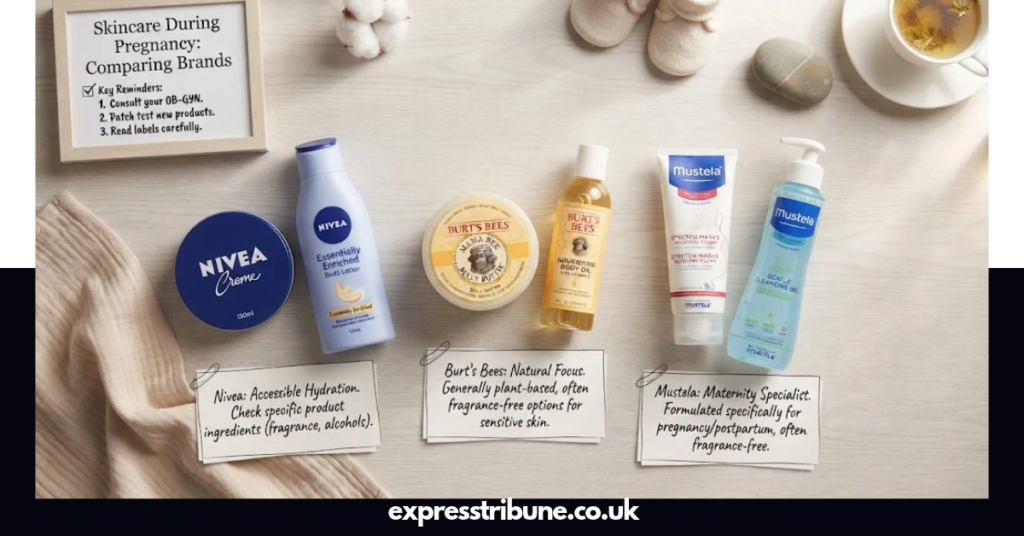

Pregnancy can change your skin in unexpected ways. Your usual lotion may suddenly cause irritation, your belly may feel dry and itchy, or you may want to avoid ingredients that could pose risks to your developing baby. Choosing skincare becomes confusing when brands such as Nivea, Burt’s Bees, and Mustela offer so many different products. The good news is that you can build a simple skincare routine by checking individual ingredients rather than relying on a brand name alone.
Are Nivea Products Safe Compared to Burt’s Bees or Mustela During Pregnancy?
Yes, many products from all three brands may be suitable during pregnancy, but safety depends on the specific formula and how you use it. Nivea offers everyday moisturizers, Burt’s Bees emphasizes many naturally derived ingredients, and Mustela has a dedicated maternity skincare range. None of these brand names alone guarantees that every product is suitable for every pregnant woman.
The American College of Obstetricians and Gynecologists (ACOG) advises pregnant women to avoid topical retinoids and consult their healthcare professional about skincare ingredients that raise concerns.
Here is a quick comparison:
| Feature | Nivea | Burt’s Bees | Mustela |
| Main skincare focus | Everyday moisturizers and body care | Many naturally derived skincare products | Baby care and dedicated maternity skincare |
| Pregnancy-specific range | Depends on the product | Depends on the product | Yes |
| Moisturizing options | Creams, lotions, body care | Lotions, balms, creams | Maternity creams, oils, lotions |
| Natural ingredients | Varies by formula | Many products contain naturally derived ingredients | Many products use ingredients of natural origin |
| Fragrance options | Depends on the product | Depends on the product | Fragrance-free options are available in some ranges |
| Stretch mark care | Moisturizers can soften dry skin | Product-dependent | Dedicated stretch mark products |
| What to check | Full ingredient list | Full ingredient list, including essential oils | Full ingredient list and exact product |
| Best selection approach | Choose based on ingredients and skin type | Check for botanical sensitivities | Consider maternity-specific formulas if desired |
Important: This is a general brand comparison, not a medical safety certification or a claim that one brand is universally safer than another.
Why Skincare Safety Matters During Pregnancy
Pregnancy brings hormonal changes that can affect your skin’s oil production, moisture levels, sensitivity, and pigmentation. Some women experience dryness and itching, while others notice acne, redness, or darker patches.
These changes do not automatically mean you need to replace every product in your bathroom. A simple routine with gentle cleansing, moisturizing, and sun protection is often sufficient.
When choosing skincare during pregnancy, focus on three things:
- Ingredient safety: Check active ingredients, especially in acne treatments and anti-aging products.
- Skin tolerance: Avoid products that cause burning, itching, or redness.
- Product purpose: A body moisturizer has a different purpose from a medicated acne treatment or a concentrated exfoliating serum.
The goal is to maintain comfortable, hydrated skin without introducing unnecessary irritation or questionable active ingredients.
Are Nivea Products Safe During Pregnancy?
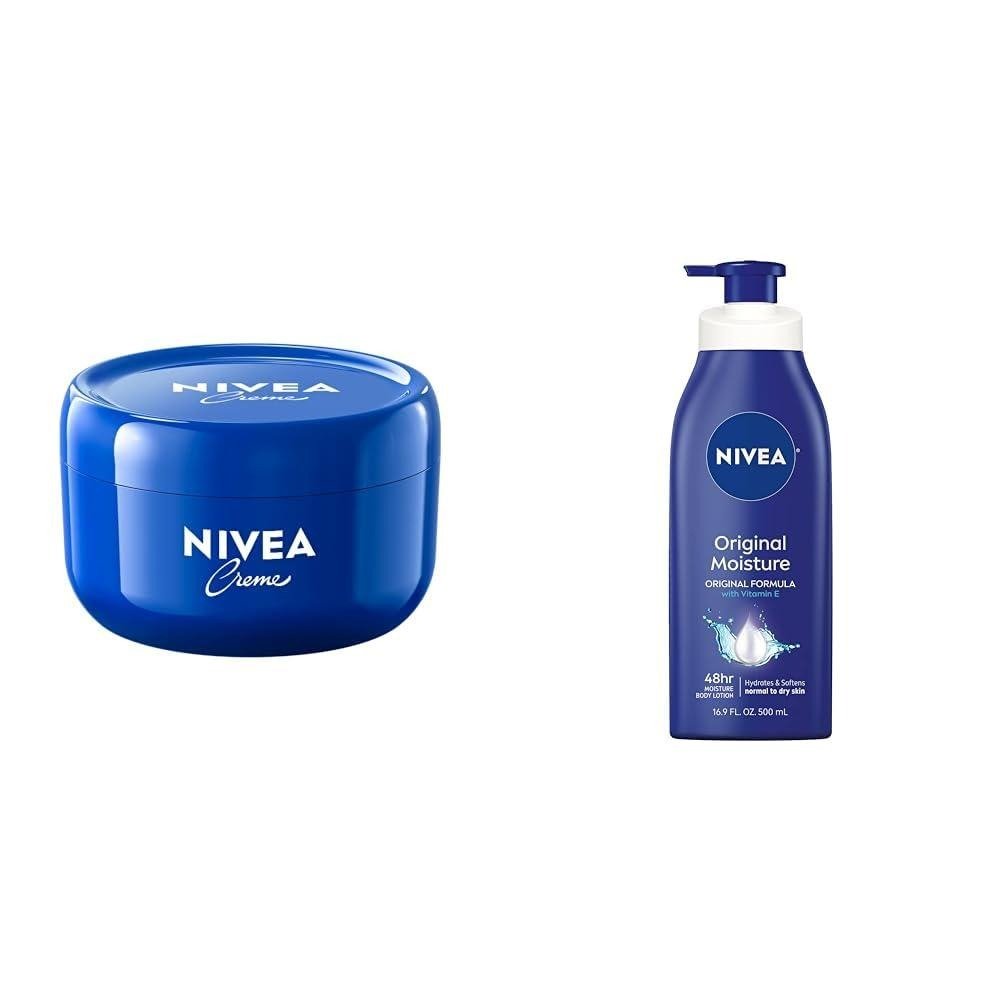
Nivea makes a wide range of skincare products, including body lotions, face creams, hand creams, lip care, and products for dry skin. Many ordinary moisturizers can fit into a pregnancy skincare routine, provided their individual ingredients are appropriate for your needs.
However, not every Nivea product has the same formula. A basic body cream should not be treated as equivalent to an anti-aging serum, acne treatment, or intensive skin-brightening product.
What to look for in Nivea products
When considering a Nivea moisturizer, check the packaging for ingredients such as:
- Glycerin: Helps attract water to the skin.
- Petrolatum: Helps reduce moisture loss and protect dry skin.
- Panthenol: Helps support skin hydration and comfort.
- Emollient oils and butters: Help soften rough, dry skin.
- Fragrance: May irritate sensitive skin, although its presence alone does not establish pregnancy-related harm.
Nivea’s official ingredient guidance recommends checking the ingredient list on the product packaging or its individual product page because formulas differ.
Which Nivea products should you check more carefully?
Pay particular attention to products marketed for:
- Anti-aging and wrinkle reduction
- Intensive acne treatment
- Skin lightening or pigmentation correction
- Strong exfoliation
- Concentrated treatment of dark spots
These categories may contain active ingredients that deserve closer review during pregnancy. Check the full ingredient list rather than assuming a product is suitable because it belongs to a familiar brand.
Is Nivea Creme suitable for a pregnant woman?
A basic moisturizing cream may be an option for dry hands, elbows, legs, or other areas, depending on the exact formula and your skin’s tolerance. However, the classic cream and other Nivea products should not automatically be considered interchangeable.
If you have eczema, a fragrance allergy, or unusually sensitive skin, a fragrance-free moisturizer may be easier to tolerate.
Are Burt’s Bees Products Safe During Pregnancy?
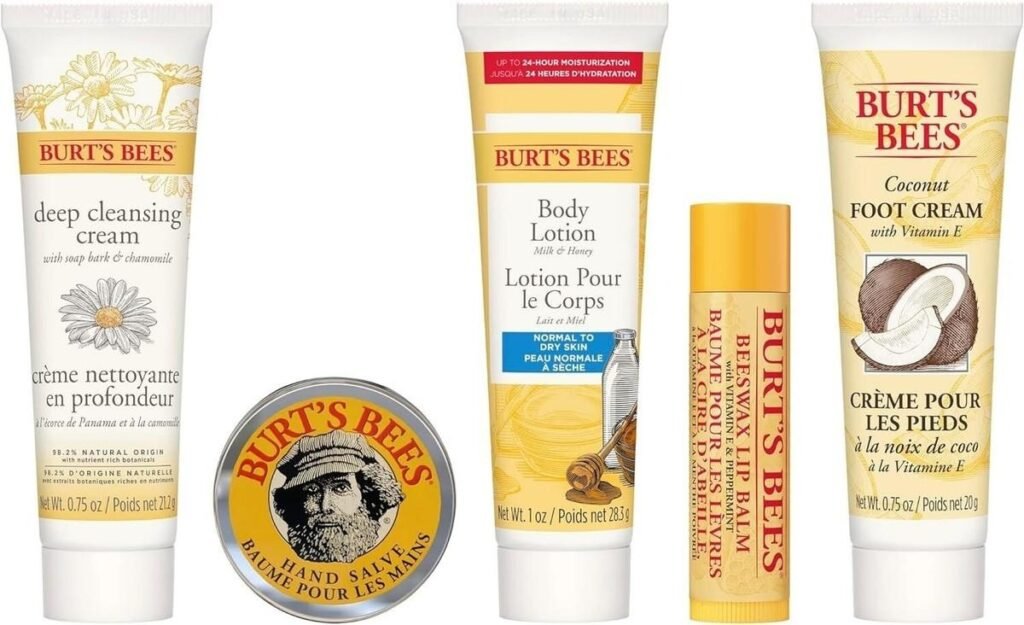
Burt’s Bees is known for products containing ingredients such as beeswax, shea butter, aloe, and plant-derived oils. These ingredients can help soften skin and reduce dryness, depending on the formulation.
The word natural, however, does not automatically mean pregnancy-safe or irritation-free. Plant extracts, essential oils, and fragrance ingredients can still cause allergic reactions or sensitivity.
Burt’s Bees states that its individual product pages and packaging provide ingredient information for checking specific formulas.
What are the benefits of Burt’s Bees skincare?
Depending on the product, potential benefits include:
- Moisturizing dry lips and hands
- Softening rough skin
- Helping reduce moisture loss
- Providing everyday body and face care
- Offering options with naturally derived ingredients
What should pregnant women check?
Read the ingredient list carefully, especially when using concentrated botanical products or products containing essential oils.
If you have allergies to beeswax, honey, pollen-related ingredients, botanical extracts, or other components, check the formula before applying it. An ingredient being plant-derived does not guarantee that it will suit your skin.
Is Burt’s Bees better because it uses natural ingredients?
Not necessarily. Natural-origin percentages describe the source of ingredients, not the overall pregnancy safety of a finished product. A well-formulated conventional moisturizer may suit you just as well as a natural-origin alternative.
Choose a product based on its ingredients, fragrance level, skin tolerance, and intended use rather than the word natural alone.
Are Mustela Products Safe During Pregnancy?
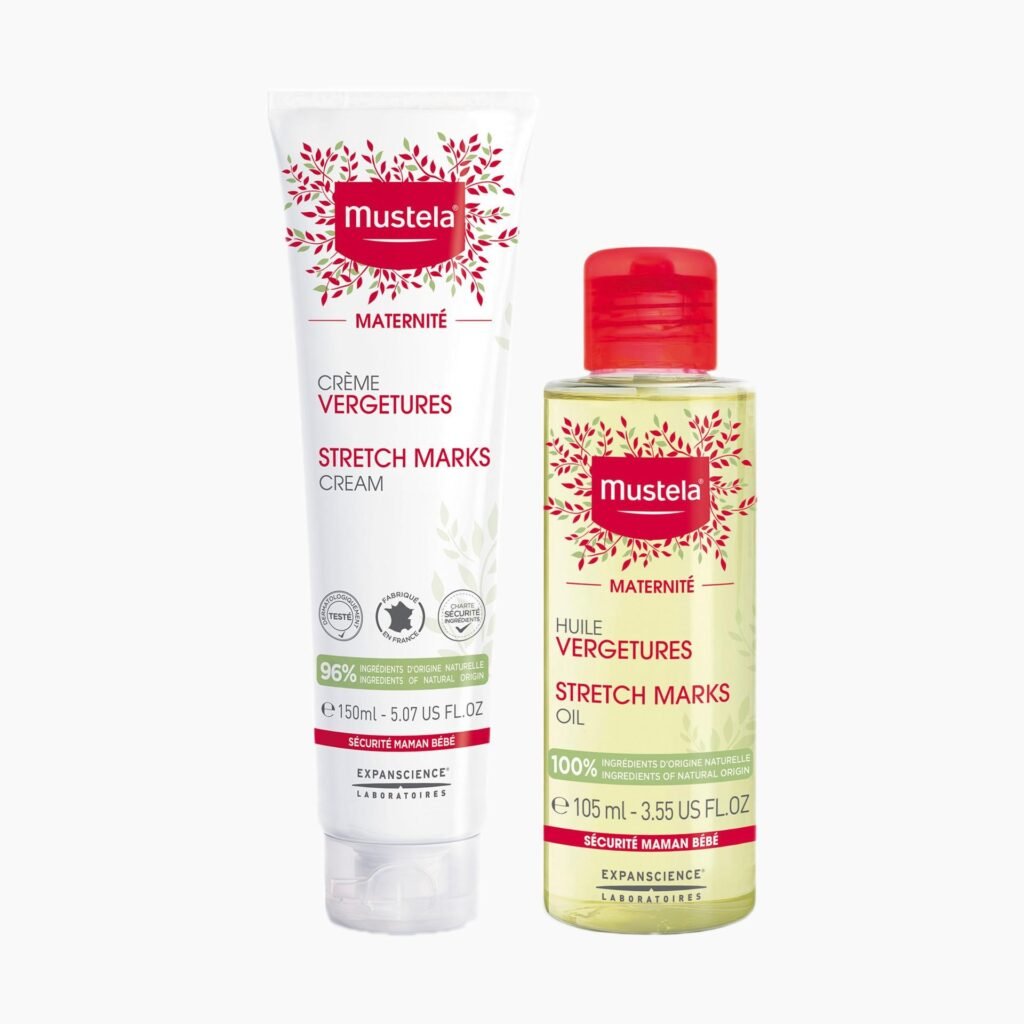
Mustela offers a dedicated maternity skincare range, including stretch mark creams, oils, and other products designed for changing skin during pregnancy and after childbirth.
Its maternity products use ingredients such as avocado oil, passion fruit (maracuja) seed oil, glycerin, and other moisturizing ingredients, depending on the formula. Mustela states that its maternity range is designed for use during pregnancy and breastfeeding.
What makes Mustela different?
The main difference is its dedicated focus on pregnancy-related skincare needs. Instead of choosing only from general body lotions, you can look at products specifically marketed for a growing belly, dry skin, and stretch mark care.
Possible benefits include:
- Moisturizing skin that feels tight or dry
- Helping soften rough skin
- Supporting the skin’s moisture barrier
- Providing targeted care for the belly, thighs, hips, and other areas
- Offering specialized maternity formulations
Is Mustela automatically safer than Nivea?
Not automatically. A pregnancy-specific product can be convenient, but the brand name and intended use do not replace checking the ingredients.
Mustela’s official stretch mark cream page lists its ingredients and explains its intended use during pregnancy and breastfeeding. Check the current formula in your country before purchasing because product formulations and availability can vary.
Nivea vs. Burt’s Bees vs. Mustela: Complete Comparison Table
The most useful way to compare these brands is to consider your skincare goal, skin type, and the specific formula rather than looking for a single universal winner.
| Comparison factor | Nivea | Burt’s Bees | Mustela |
| Everyday body moisturizing | Offers a wide selection | Offers moisturizing products | Offers everyday and maternity products |
| Dry, rough skin | Look for rich creams and emollients | Look for suitable moisturizing balms or creams | Look for maternity moisturizers or creams |
| Stretch mark care | General moisturizing products | Depends on individual product | Dedicated stretch mark products |
| Naturally derived ingredients | Varies by product | A focus of many formulas | A focus of many formulas |
| Fragrance sensitivity | Check for parfum/fragrance | Check fragrance and botanical extracts | Fragrance-free choices exist in some ranges |
| Sensitive skin | Choose according to tolerance | Botanical ingredients may not suit everyone | Check the specific formula and your sensitivities |
| Face care | Broad product selection | Product-specific | Product-specific |
| Lip care | Product-dependent | Lip balms are a notable product category | Depends on available range |
| Ingredient transparency | Product packaging and official pages | Product packaging and official pages | Product packaging and official pages |
| Pregnancy-specific positioning | Varies by product | Varies by product | Dedicated maternity range |
| Expected stretch mark prevention | No moisturizer guarantees prevention | No moisturizer guarantees prevention | Dedicated products may moisturize and improve skin comfort |
| Price and availability | Depends on market and size | Depends on market and size | Depends on market and size |
| Recommended selection method | Review the formula | Review the formula | Review the formula |
How should you interpret this comparison?
If you want a basic body moisturizer, compare suitable products from all three brands. If you specifically want a stretch mark cream, Mustela’s maternity range gives you products designed for that purpose.
If you prefer products containing naturally derived ingredients, Burt’s Bees and Mustela both offer options worth examining. Nevertheless, no single brand is guaranteed to be the right choice for every pregnant woman.
Pregnancy Skincare Ingredients: What to Use and What to Avoid
Knowing how to read an ingredient list can be more useful than memorizing brand names.
The following table provides general guidance. It is not a substitute for individualized medical advice, especially if you use prescription treatments.
| Ingredient or category | General pregnancy guidance | Why it matters |
| Glycerin | Commonly used in moisturizers | Helps attract and retain moisture |
| Petrolatum | Commonly used in moisturizers | Helps reduce water loss |
| Hyaluronic acid | Commonly used in topical skincare | Helps hydrate the skin |
| Ceramides | Commonly used in moisturizers | Support the skin barrier |
| Shea butter | Commonly used in moisturizers | Softens dry skin |
| Avocado oil | Commonly used in skincare | Helps soften and condition skin |
| Vitamin C | Generally used in topical skincare | Often included in antioxidant and pigmentation products; check the full formula |
| Niacinamide | Generally used in topical skincare | Supports the skin barrier and may help with uneven tone |
| Salicylic acid | ACOG lists topical use among OTC acne-treatment options during pregnancy | Follow product directions and ask your clinician about stronger or extensive use |
| Benzoyl peroxide | ACOG lists topical use among OTC acne-treatment options during pregnancy | Use an appropriate product as directed |
| Glycolic acid | ACOG lists topical use among OTC acne-treatment options during pregnancy | Concentration and formulation matter |
| Retinol and other topical retinoids | Generally avoid during pregnancy | Pregnancy guidance recommends avoiding topical retinoids |
| Prescription tretinoin or adapalene | Discuss with your prescriber; generally avoid during pregnancy | These belong to the retinoid family |
| Oral isotretinoin | Do not use during pregnancy | Associated with serious birth defects |
| Hydroquinone | Generally best avoided unless your clinician specifically advises otherwise | Pregnancy safety data are limited |
| Essential oils and botanical extracts | Check the specific ingredient and formulation | Natural ingredients can cause irritation or allergic reactions |
ACOG identifies topical retinoids as ingredients to avoid during pregnancy and discusses several OTC acne-treatment ingredients that may be used when needed. MotherToBaby also provides guidance on topical acne treatments during pregnancy.
Important distinction: A skincare ingredient being generally used in pregnancy does not mean every product containing it is suitable for every person. Concentration, application area, skin condition, and other ingredients all matter.
Which Skincare Ingredients Should You Avoid or Review Carefully?
Pregnancy is a good time to simplify your routine and review products that contain strong active ingredients.
Retinol and retinoids
Retinoids include ingredients such as retinol, tretinoin, and adapalene. These ingredients are used in some acne and anti-aging products. Medical guidance generally recommends avoiding topical retinoids during pregnancy.
Look for names such as:
- Retinol
- Retinal or retinaldehyde
- Tretinoin
- Adapalene
- Tazarotene
- Retinyl palmitate
If you are uncertain whether a product contains a retinoid, show its complete ingredient list to your obstetrician or pharmacist.
Hydroquinone and strong pigmentation treatments
Hydroquinone is used in some products for dark spots and uneven pigmentation. Because pregnancy-specific safety information is limited, discuss it with your clinician before use and generally choose an alternative during pregnancy.
High-strength exfoliating products
Some exfoliating acids may be appropriate in selected formulations, but stronger peels and concentrated treatment products need more careful consideration. Avoid experimenting with aggressive at-home treatments during pregnancy without professional advice.
Fragrance and essential oils
Fragrance is not automatically a pregnancy hazard, but it can irritate skin or trigger allergies. Essential oils and plant extracts also vary widely, so do not assume that all botanical ingredients are suitable simply because they are natural.
If you experience a rash, burning, swelling, or persistent itching after applying a product, stop using it and seek medical advice if symptoms continue or become severe.
How to Choose a Moisturizer for a Growing Belly
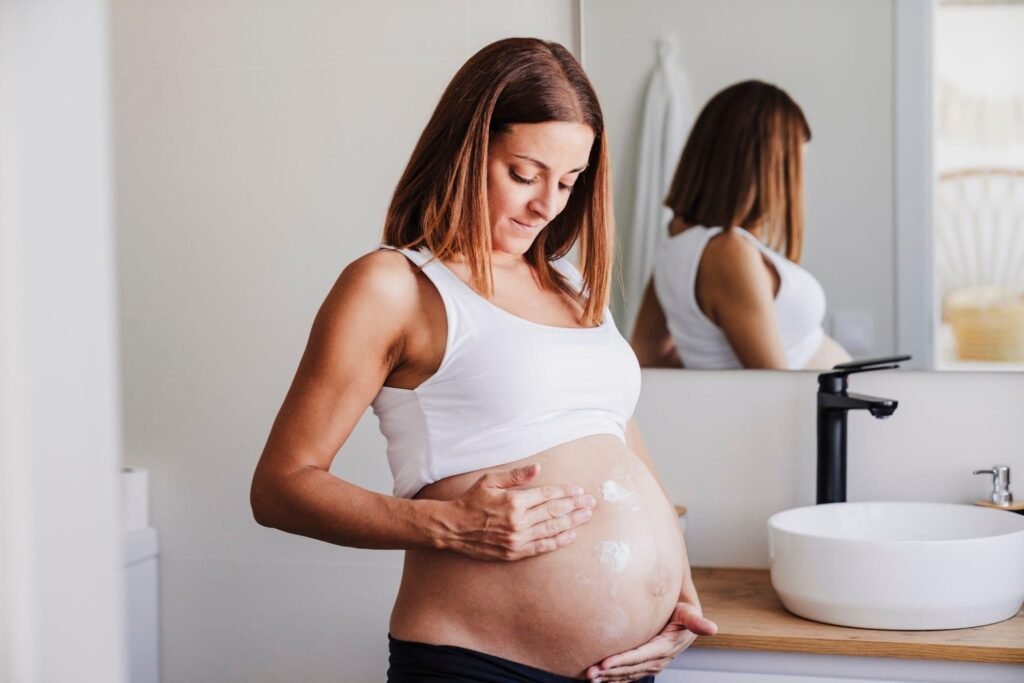
As your belly grows, the skin stretches and may feel dry, tight, or itchy. A moisturizer can help improve comfort, even though it cannot guarantee that stretch marks will not develop.
When comparing Nivea, Burt’s Bees, and Mustela, look for a formula that feels comfortable on your skin and provides enough hydration without causing irritation.
What to look for
- A cream or lotion that keeps your skin moisturized.
- Glycerin or other humectants to attract moisture.
- Emollients that soften the skin.
- Ingredients that help reduce water loss.
- A fragrance-free option if you have sensitive skin.
- Packaging with a complete, readable ingredient list.
How to apply body moisturizer
- Apply the moisturizer after bathing, while your skin is slightly damp.
- Spread a comfortable amount over your belly, hips, thighs, and other dry areas.
- Massage gently rather than rubbing aggressively.
- Reapply when your skin feels dry or tight.
- Stop using the product if it causes irritation.
There is no need to buy several different stretch mark products at once. Start with one suitable moisturizer and see how your skin responds.
Can Nivea, Burt’s Bees, or Mustela Prevent Stretch Marks?
No moisturizer can guarantee that you will not develop stretch marks.
Stretch marks are influenced by factors such as genetics, hormonal changes, and how much the skin stretches during pregnancy. Moisturizers can soften the skin and relieve dryness, but evidence does not establish that they reliably prevent stretch marks.
ACOG explains that many treatments marketed for stretch marks have not been proven to work, although heavy moisturizers may help keep the skin soft.
What can these products realistically do?
| Goal | What a moisturizer may do | What it cannot guarantee |
| Dryness relief | Reduce dry, rough skin | Permanently eliminate dryness |
| Skin comfort | Reduce tightness associated with dryness | Prevent every pregnancy-related skin change |
| Skin softness | Make skin feel smoother | Change your genetic predisposition to stretch marks |
| Stretch mark appearance | Improve hydration and skin feel | Prevent all stretch marks |
| Itching from dry skin | Provide temporary relief | Treat every cause of pregnancy-related itching |
Mustela’s maternity products are marketed for stretch mark care, but its product claims should be understood in the context of the specific formula and supporting evidence. A dedicated stretch mark cream is still a moisturizer, not a guarantee against stretch marks.
If you develop severe or persistent itching, particularly on your palms or soles, contact your maternity care provider promptly rather than relying on lotion alone.
Pregnancy Skincare Routine: A Simple Morning and Night Plan
A simple routine can keep your skin comfortable without adding unnecessary products.
Morning routine
- Wash your face with a gentle cleanser.
- Apply a moisturizer that suits your skin.
- Use broad-spectrum SPF 30 or higher sunscreen.
- Apply body lotion to dry areas if needed.
Night routine
- Cleanse gently to remove sunscreen and makeup.
- Apply your regular moisturizer.
- Moisturize your belly, hips, and thighs if they feel dry.
- Use only pregnancy-appropriate treatments recommended for your skin concerns.
Why sunscreen matters
Pregnancy can make some forms of pigmentation more noticeable. A broad-spectrum sunscreen, protective clothing, and shade can help reduce sun exposure that contributes to uneven skin tone.
Choose a sunscreen with an appropriate SPF and follow the label directions. If you have melasma or persistent pigmentation, ask your dermatologist about a suitable pregnancy skincare plan.
Which Brand Should You Choose for Your Skin Type?
Instead of choosing based only on brand popularity, match the product to your actual concern.
| Your skin concern | What to prioritize | How to compare the brands |
| Very dry body skin | A rich moisturizer with effective emollients | Compare suitable Nivea creams, Burt’s Bees moisturizing products, and Mustela maternity moisturizers |
| Sensitive skin | A simple, fragrance-free formula | Check each ingredient list; do not assume botanical products are automatically gentler |
| Growing belly | Regular hydration and comfortable application | Compare everyday body creams with Mustela’s dedicated maternity products |
| Stretch mark concerns | Moisturizing and realistic expectations | Consider a maternity-specific cream if you prefer one, while understanding its limitations |
| Dry lips | A basic lip balm without irritating ingredients | Compare the specific lip balm formulas and any known allergens |
| Acne during pregnancy | Gentle cleansing and a clinician-approved treatment plan | Review active ingredients rather than selecting by brand |
| Dark spots or melasma | Sun protection and pregnancy-appropriate treatment | Ask a dermatologist before using strong pigmentation products |
| Fragrance sensitivity | Fragrance-free skincare | Check for parfum, essential oils, and fragrance allergens |
What if your skin is both oily and dry?
Pregnancy can change your usual skin type. You might experience an oily forehead but dry cheeks, for example.
In that case, use a lighter moisturizer on oilier areas and a richer cream on dry areas if both products suit your skin. Avoid adding several new products at once because that can make it harder to identify the cause of irritation.
How to Read Skincare Labels Before Buying
Reading the ingredient label is one of the most practical ways to make an informed skincare choice during pregnancy.
Follow these steps when comparing products:
- Find the complete ingredient list. Check the box, bottle, or official product page.
- Identify the product’s purpose. A basic moisturizer differs from a treatment for acne, wrinkles, or pigmentation.
- Look for ingredients you have been advised to avoid. Pay special attention to retinoids and prescription treatments.
- Check for personal allergens. Fragrance, essential oils, and botanical extracts may trigger reactions in susceptible people.
- Confirm the exact formula. Names, ingredients, and formulations can differ between countries and product versions.
- Check the expiration date. Avoid expired or improperly stored skincare products.
- Ask a professional if uncertain. A pharmacist, dermatologist, or obstetrician can help review the ingredient list.
What does “dermatologically tested” mean?
This phrase generally indicates that a product has undergone some form of skin-related testing, but the exact testing method can vary. It does not automatically establish that every ingredient is suitable for every pregnant woman.
Similarly, claims such as natural, organic, hypoallergenic, and clinically tested should be considered alongside the complete formula and the evidence supporting the specific claim.
Common Pregnancy Skincare Mistakes to Avoid
A few simple precautions can help you maintain a comfortable routine.
- Choosing a product only because it is natural: Natural ingredients can still cause irritation.
- Assuming every product from one brand is safe: Different product lines may contain different active ingredients.
- Using multiple new products together: Introduce products gradually so you can identify a reaction.
- Using strong anti-aging products without checking ingredients: Some contain retinoids that are generally avoided during pregnancy.
- Expecting a stretch mark cream to prevent all marks: Moisturizing helps skin comfort, but prevention is not guaranteed.
- Ignoring persistent itching: Pregnancy-related itching can sometimes indicate a medical problem that needs evaluation.
- Following social media recommendations without checking the formula: Always verify the exact product and its ingredients.
- Ignoring product directions: Use products according to their labels and seek professional advice when necessary.
What if you already used a product containing retinol?
Do not panic. Stop using the product while pregnant and contact your obstetrician or healthcare professional to review the ingredient, strength, and extent of exposure. Topical exposure is different from taking an oral retinoid, and your clinician can advise you about your particular situation.
A Practical Buying Checklist for Pregnant Women
Before purchasing a Nivea, Burt’s Bees, or Mustela product, use this checklist.
I checked the complete ingredient list.
I confirmed the product’s intended use.
I reviewed any active ingredients with pregnancy-specific concerns.
I checked for fragrance or ingredients that trigger my allergies.
I confirmed the product is genuine and within its expiry date.
I considered whether a simpler moisturizer would meet my needs.
I will consult my healthcare professional if I am uncertain.
0 of 7 completed
Reset checklist
This checklist can help you compare products objectively instead of relying on advertising claims or a brand’s reputation alone.
Frequently Asked Questions
Many moisturizers from all three brands may be suitable during pregnancy, but the exact formula matters more than the brand name. Nivea offers general skincare, Burt’s Bees has many products containing naturally derived ingredients, and Mustela offers a dedicated maternity range. Check ingredients and ask your healthcare professional about any uncertain active ingredients.
A basic moisturizing cream may help soften dry belly skin if you tolerate its formula. Check the current ingredient list, discontinue use if irritation occurs, and remember that moisturizing cannot guarantee prevention of stretch marks.
No. Natural-origin ingredients are not automatically safer than synthetic ingredients. Both natural and conventional products can contain ingredients that cause allergies or irritation, so evaluate the complete formula.
Mustela markets its maternity stretch mark cream for use during pregnancy and breastfeeding and publishes its ingredients on its official product page. Check the exact product and current label, particularly if you have allergies or a sensitive skin condition.
Topical retinoids, including retinol, tretinoin, and adapalene, are generally avoided during pregnancy. Oral isotretinoin must not be used during pregnancy. Review hydroquinone and other concentrated treatments with your healthcare professional before use.
No. Moisturizers may reduce dryness and help your skin feel softer, but there is no guarantee that they will prevent stretch marks. Genetics, hormonal changes, and skin stretching all contribute to their development.
Conclusion:
When comparing Nivea, Burt’s Bees, and Mustela, focus on the product’s ingredients, your skin’s needs, and the guidance of your healthcare professional.
Nivea offers a variety of everyday moisturizers, Burt’s Bees provides options with naturally derived ingredients, and Mustela has products specifically designed for maternity skincare. All three can be considered when evaluating suitable products, but no brand is universally safest for every pregnant woman.